Add your promotional text...
Rise of Musical Composition
and hubs of Creativity
Classical composers can be seen as great discoverers of the capabilities of the intelligent part of our brain, the frontal cortex, the part that learns to think, solve multiple problems, and plan long-term projects. The progression in the richness of musical compositions in the 18th century is the same progression that we see in the development of increasingly sophisticated abilities in children over the years, those provided by their frontal cortex. It is precisely these “intelligent” abilities that today's AI seeks to automate.T
Creativity:
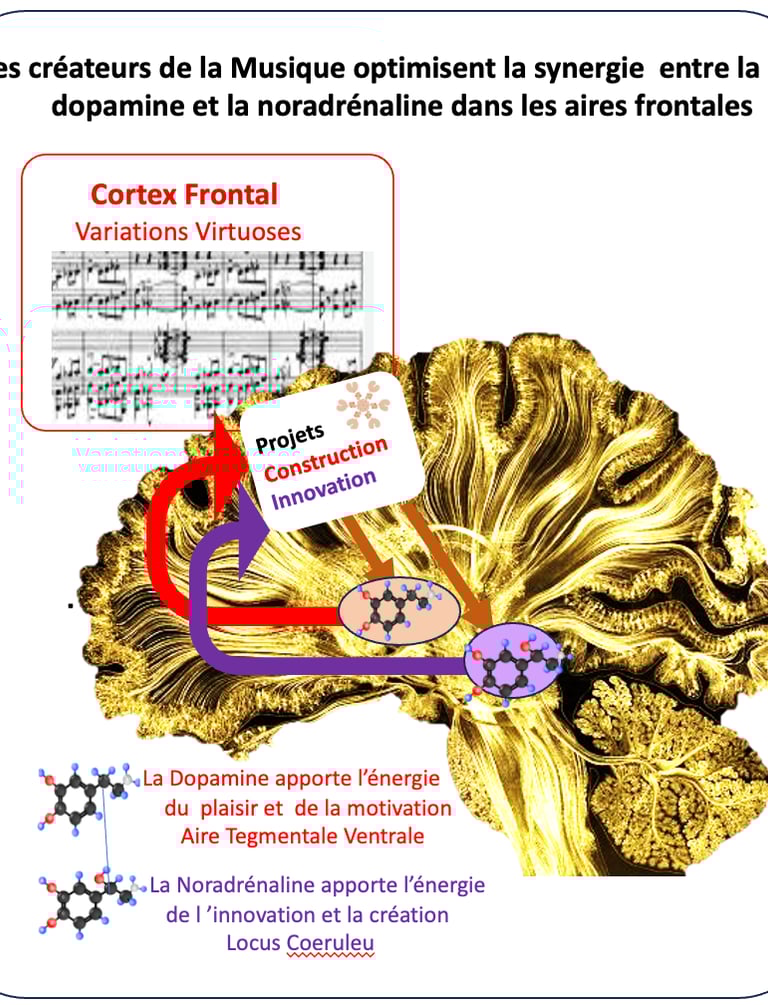
Synergy between frontal Columns for projects,
Dopamine for goal-directed construction
and Noradrenaline for innovation


Conference-Concert designed for the RVH 2026.
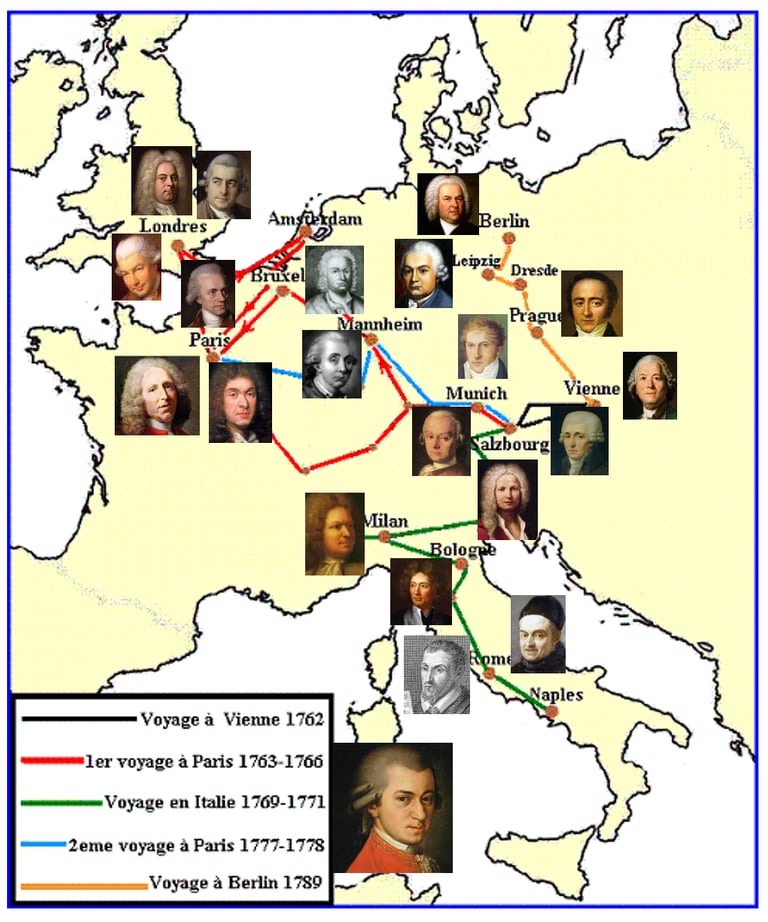
The rise of classical music exploring the capabilities of the human brain in synergy with the rise of trade in Europe
The development of the richness of classical compositions was made possible by composers who benefited from a network of economic and cultural exchanges between European cities, from Corelli in Bologna to Vivaldi in Venice, cities on the Silk Road, from Bach in Leipzig and Mozart in Vienna, major centers of commercial exchange, to Lully in Paris and Handel in London, capitals undergoing rapid commercial expansion. This network of European cities was a very effective medium for cultural exchange for musicians.